A necessary preamble: my concerns about generative AI are real. The ethics of training data, the displacement of labour, the casual erosion of consent, and the question about who profits from all that… these are not things I wave away, and I am not interested in the kind of techno-optimism that treats collateral damage as growing pains. That said, this is not a post about those concerns. They deserve their own space, their own rigour, and folding them into every conversation about AI and creative practice makes both conversations worse.
What I want to talk about here is narrower and, for me, more immediate: how technology affects the act of composing. Not generative AI producing music (which, lacking intent, is by definition not art, and I feel no compulsion to engage with it as though it were). What interests me is smart automation : tools that sit alongside the composer, handle the tedious, and clear space for the work that actually matters. This is not new. It is, if anything, the tradition itself.
A short and incomplete history of compositional machinery
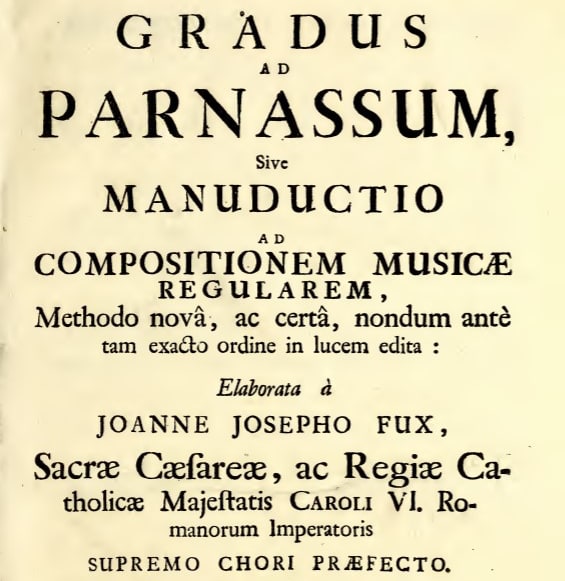
Consider counterpoint. The rules Johann Joseph Fux codified in Gradus ad Parnassum (1725) are, at their core, an algorithm: given a cantus firmus, apply these constraints, produce these intervals, avoid these parallels. Generations of composers learned to think inside that system before learning to push against it. The system did not replace their musical intent; it gave that intent something to resist.
Or consider the tape experiments of the mid-twentieth century. Pierre Schaeffer splicing railway sounds in Étude aux chemins de fer, Stockhausen stretching and layering recordings in the WDR studio: these were composers who understood that a new tool reframes the composer’s role rather than diminishing it. The instrument changes; the question of what to say with it does not.
Iannis Xenakis formalised stochastic processes in the 1950s, using probability distributions to generate musical material that no human hand would have arrived at intuitively. The computer, when it arrived, simply made such calculations faster. The creative decision (which distributions, which parameters, which results to keep and which to discard) remained entirely his.
The instrument changes. The question of what to say with it does not.
Force multipliers, not replacements
Over the years I have built software tools into my compositional workflow, each supposedly letting me iterate over raw material faster . Most of them actually do. They automate the repetitive stages of a process that would otherwise consume hours I’d rather spend on the actual artistic questions. What am I trying to say with this piece? What is the right formal structure for this idea? Where does this passage need to breathe?
These are not questions technology can answer for me. But, more importantly, they are not questions I want it to answer. The value of the tool lies in clearing space so I can sit with those questions longer, with more of my attention intact.
What AI adds to this picture (and I mean AI as an interface layer, not as a generative engine) is something I didn’t fully anticipate: natural language as a way to talk to my own tools. While I am sketching and experimenting with new material, I can now describe what I want in words rather than translating every intention into code or parameter values. Natural language is, quite unsurprisingly, the best user interface since the dawn of human life; the fact that I can now use it to interact with my own compositional machinery feels less like a rupture and more like something that was always missing.
The result is not that the tools compose for me. The result is that I can compose through them with less friction, which means more of my intent reaches the page. The instrument doesn’t replace the force; it amplifies it.
I should be honest about a tension here: speed is not always a virtue! Slowness has its own creative function; the manual labour of working through material by hand sometimes produces discoveries that a faster process would skip over entirely. I’ve had that experience enough times to take it seriously. The choice to automate a given step is itself a compositional decision, and it deserves the same scrutiny as any other.
The lineage
What I keep coming back to is this: every tool I’ve adopted (notation software, DAWs, custom algorithms) has changed how I work without changing why . Fux’s counterpoint rules, Schaeffer’s tape splicer, Xenakis’s probability distributions, my own scripts, and now a conversational layer on top of them (more on this soon!) … the lineage is continuous. Each one shifted the boundary between what the composer does by hand and what the composer delegates to a system, and each time the interesting question remained the same: what do you want to say, and does the tool help you say it with more precision?
The why is the part that matters. The tools are merely in service of that (not neutrally, I am well aware… but that’s a yarn for another time).